
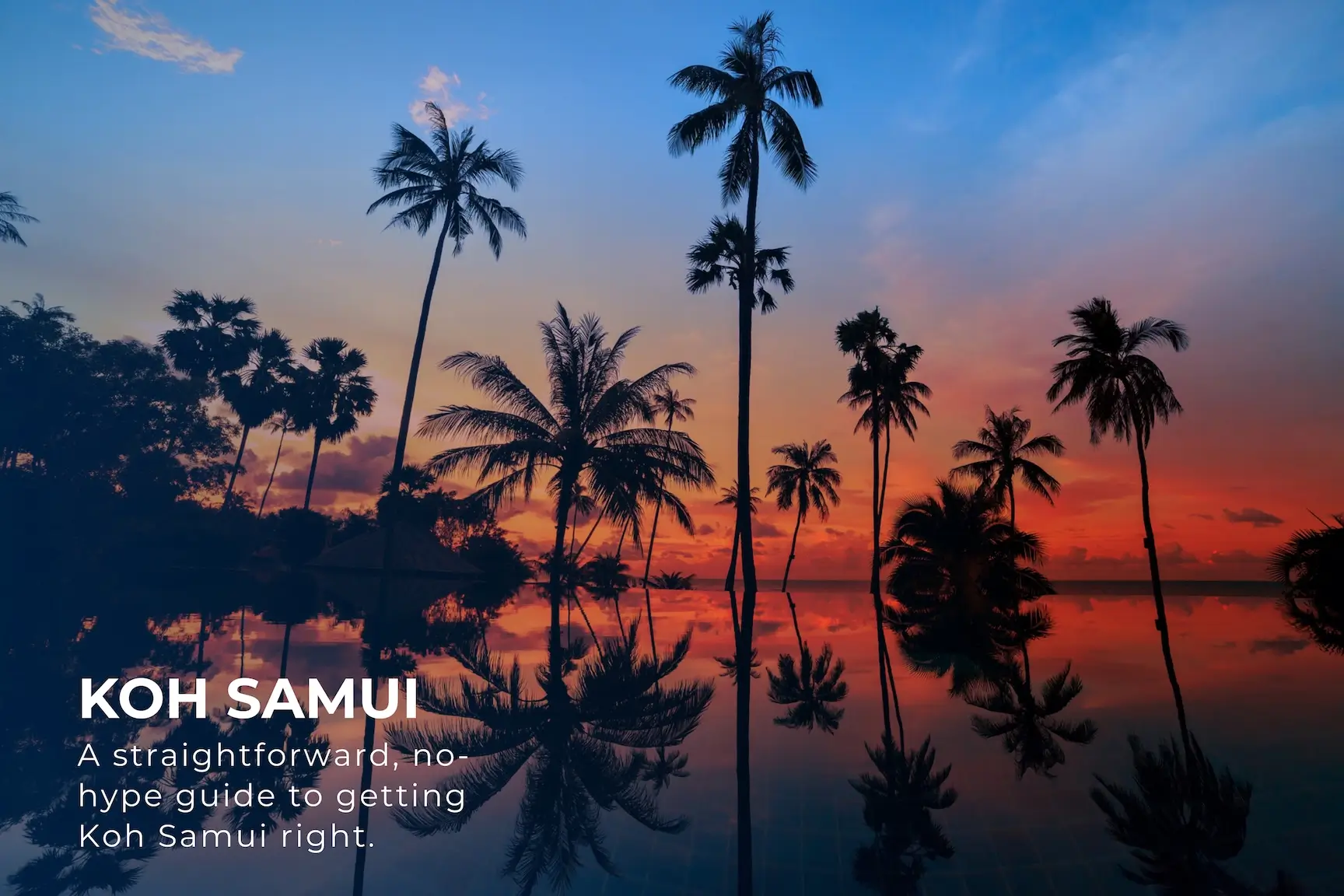
Koh Samui Travel Guide 2026 – Where to Stay, Beaches & More
Welcome to My Koh Samui – a straightforward, no-hype guide to getting Koh Samui right.
If you’re planning a first trip, or trying to decide where to base yourself for a longer stay, this island can sometimes be confusing. It’s bigger than it looks on a map, the beach areas can feel quite different, and your choice of area changes your whole experience.
This site is here to make that choice easier. We cover where to stay, how to get here and get around, what the weather actually does, and what to do once you’ve arrived.
What Makes Koh Samui Different
Koh Samui sits in the Gulf of Thailand, about 700km south of Bangkok. It’s Thailand’s third-largest island, but unlike many Thai islands, it feels like a proper, lived-in place.
There are sealed roads all the way around, an international airport in the northeast, international hospitals, supermarkets, co-working spaces, and services that run year-round. That mix is why you see such a broad crowd here — honeymooners and families in the same week as remote workers, retirees, and weekenders from Bangkok.
The island itself is a blend of long sandy bays, coconut plantations that still cover much of the interior, forested hills with viewpoints, and a coastline dotted with Buddhist temples. It’s never going to be a remote, off-grid island. Its strength is variety: you can find lively beaches with beach clubs and late nights, and quiet coves 15 minutes away where the loudest thing is a longtail boat.
It’s also a natural hub for island-hopping. Koh Phangan and Koh Tao are both close by ferry, and Ang Thong National Marine Park is accessible as a day trip.
Getting to Koh Samui
There are three main ways to get here, and the difference is mostly cost vs. time.
1. Fly Direct to Samui (USM)
Samui Airport is small, open-air, and right near Chaweng and Bophut. Bangkok Airways and a handful of regional carriers run direct flights from Bangkok, Phuket, and Singapore. It’s the fastest and easiest option, but usually the most expensive flight in Thailand on a per-kilometre basis.
2. Fly to the Mainland and Take the Ferry
The budget route most travellers use. Fly to Surat Thani Airport (URT) or Nakhon Si Thammarat, then bus to the pier and ferry across. Combined bus+ferry tickets are sold everywhere and the whole transfer takes 3-5 hours from landing. It’s also possible by train from Bangkok to Surat Thani, then ferry.
3. Ferry from Nearby Islands
If you’re coming from Koh Phangan or Koh Tao, high-speed ferries and slower car ferries run multiple times daily between the islands. Connections are straightforward and can be booked the day before in high season, day-of in low season.
First Hours: Airport and Piers
From the airport, you’re 10 to 40 minutes from almost anywhere. Official airport taxis operate with a counter, and most hotels offer private transfers that are worth booking if you arrive late.
If you arrive by ferry, you’ll come into either Nathon on the west coast or Bang Rak / Lipa Noi. Expect songthaews (shared pickup taxis), minivans and taxi touts meeting every arrival. Agree on price and destination before you get in, and keep your hotel name in Thai on your phone — it helps enormously.
Getting Around Koh Samui
The island is about 25km across at its widest point. Distances are short but travel can be slow, especially on the east coast in the late afternoon.
Here’s how people get around:
Songthaew: Koh Samui’s shared taxis. They loop the main ring road during the day and are cheapest for short hops between Chaweng, Lamai, Bophut and Mae Nam. In the evening they operate more like private taxis.
Taxis and Ride Apps: Available island-wide but more expensive than in Bangkok or Chiang Mai. Always confirm if the price is per person or per vehicle.
Car Rental: Often the best call for families and anyone staying more than a few days. Roads are paved and signposted, though driving is on the left and traffic around Chaweng can be heavy.
Scooter Rental: Extremely common, but only recommended for confident riders with a proper licence and insurance. Accidents are frequent, helmets are legally required, and medical bills add up fast without insurance.
You can walk easily within each beach town, but you’ll need wheels to go between them.
Where to Stay: Choosing Your Base
Where you sleep matters more in Samui than on most islands. The vibe changes completely from bay to bay.
Chaweng is the long, busy beach on the east coast. Most resorts, malls, restaurants and nightlife are here. Good for first-timers who want everything in walking distance, less good if you want quiet nights.
Read our full Chaweng Beach Guide
Lamai sits just south of Chaweng. Still has plenty of restaurants, bars and shops but feels more local and less full-on. A solid middle ground.
Read our full Lamai Beach Guide
Bophut and Fisherman’s Village on the north coast has become the island’s lifestyle hub. A preserved row of old wooden shophouses, now boutique shops and restaurants, with a sandy beach out front. Popular with couples, food-focused travellers and families who want a walkable dinner scene.
Read our full Bophut and Fisherman’s Village Guide
Mae Nam in the north is a long, quieter stretch with good value, softer sand and views to Koh Phangan. Favoured by long-stayers, families and anyone who prefers space.
Read our full Mae Nam Beach Guide
Choeng Mon in the northeast is a small, sheltered bay that feels self-contained — great for families and swimmers.
Bang Rak, Bang Por, Lipa Noi and Taling Ngam on the north and west coasts are progressively quieter. Think sunset views, villa stays, yoga and wellness resorts, and local seafood restaurants rather than nightlife.
When to Go: Weather and Seasons
Koh Samui doesn’t follow the same weather pattern as Phuket or Krabi.
December to April is generally the most settled: sunny, drier, with calm seas. This is peak season, especially late December to February.
May to August is hot and still good for beach time, with short, sharp showers rather than all-day rain. A popular window because it’s often dry here when the Andaman side is in monsoon.
September to November is the wettest period, with October and November typically seeing the heaviest rain. Storms can disrupt ferry services for a day or two at a time.
If you’re flexible, Koh Samui works particularly well as a Thai island option in June to August.
What to Do on Koh Samui
Beaches are still the main event, but there’s plenty beyond sun-lounging.
Beach Days: Chaweng for activity and watersports, Choeng Mon and Lipa Noi for calm swimming, Lamai and Mae Nam for long walks.
Temples and Culture: Wat Phra Yai with the Big Buddha on the small island connected to the northeast, Wat Plai Laem’s colourful complex nearby, and smaller hilltop shrines with island views.
Nature: The Na Muang waterfalls (best after rain), viewpoints like Lad Koh between Chaweng and Lamai, and the jungle tracks that cut across the interior to hidden bars and cafes.
Boat Trips: Ang Thong National Marine Park for karst islands and lagoons, plus day trips for snorkelling around Koh Tao and Koh Nang Yuan. Most operators include hotel transfers.
We’ll add dedicated pages for beaches, temples, viewpoints and day trips as the site grows.
Eating, Drinking and Nightlife
Samui has one of the best food scenes of any Thai island. You’ll find southern Thai curry shops and seafood grills next to wood-fired pizzerias, Japanese izakayas and French bakeries — a legacy of its long-term expat community and visitor mix.
In Fisherman’s Village and Choeng Mon you’ll get a more restaurant-focused night. Chaweng and Lamai have everything from beer bars to beach clubs. The west coast is where to go for sunset dinners.
Nightlife is concentrated by area: beach bars and late venues in Chaweng, live music and pubs in Lamai, cocktail-focused spots in Bophut. It’s easy to join or avoid depending on where you base yourself.
Good to Know Before You Go
Money: Cash is still king for taxis, markets and smaller restaurants. ATMs are everywhere, and most resorts and larger restaurants take cards.
Health: Koh Samui has several well-equipped private hospitals and clinics. Pharmacies are plentiful.
Staying Connected: 4G/5G coverage is strong around the ring road and beach areas. Tourist SIMs are cheap at convenience stores.
Temple Etiquette: Cover shoulders and knees in temple grounds and remove shoes before entering buildings.
Insurance: Recommended, especially if you plan to rent a scooter or join boat tours. Check that your policy covers motorbike use.
How to Use This Site
This homepage is a starting point. Over the next few months, My Koh Samui will expand into detailed guides on each beach area, transport, weather, things to do, and practical island living — all focused on helping you choose where to stay and what to expect, not just what looks good on Instagram.
If you’re deciding between areas now, start with where to stay, then check how to get around. Those two decisions shape the rest of your trip more than anything else.
Welcome to Koh Samui.